Benefactors ($50)
Lilie Allen
Mary Beth Bretzlauf
William Carey
Phillip Cozzi
Marcia Gutierrez
James Lowell Hall
Janea D. Harris
Kathryn Haydon
M. E. Hope
Judith Kaufman
Laura Krueger
Kathryn Kruger
Christopher Kuhl
William L. Lederer
G. Jordan Maclay
Tom Moran
Jenene Ravesloot
Kim Reed
Marjorie Rissman
Joseph J. Solberg
Judith SooHoo
Arthur Voellinger
Patrons ($30)
Jocelyn Ajami
Candace Armstrong
Diane Lotko Baker
Mary Jo Balistreri
Camille A. Balla
Paul Buchheit
Thomas Chockley
Carole Croll
Judith Cummings
Jennifer Dotson
Daniel Fitzgerald
Lynn Fitzgerald
Karen Fullett-Christensen
Leo Gehr
John J. Gordon
Larry Hays
Colleen Hein
Edward J. Herdrich
Melissa Huff
Maggie Kennedy
Elizabeth Stanley King
Sheila Kirscher
S. Michael Kozubek
Lennart Lundh
Carol Marcus
William Marr
Georgina Milsted
James O'Brien
John O'Connor
Marcia Pradzinski
Donita Ries
Barbara Robinette
Nancy Schaefer
Irfanulla Shariff
Ruth Siburt
Terry L. Slaney
Teresa Smith
Tabitha Tripp
Paul B. Vanni
Jim Wilkerson
Court Williams
Welcome to this website for the Illinois State Poetry Society, connecting ISPS members with each other and with the general public. Here you'll find information for and about this group of serious poets. Since June of 2000 we have been posting bimonthly (monthly since 2021) editions of poetry written by ISPS members.
You are invited to read the ISPS member poems and haiga posted in February, 2025 as well as previous postings. In March, 2020 (beginning of the pandemic) we published a special edition of poems on the theme of "water".
To join ISPS through June, ,
please fill out our Membership Form and mail it with a check for $20.00 for regular membership, $30.00 for "Patron" listing, $50.00 for "Benefactor" listing, or $10.00 for student membership (ages 11-21). You don't have to be an Illinois resident to join ISPS.
Happy New Year! I hope all of you had a safe, warm, and wonderful holiday.
Congratulations to our winning members of our contest! We will be hosting a virtual reading of the prize-winning poems on Thursday, January 23rd at 6:30PM CST. To meet the poets and listen to their poems, email me at isps.manningham@gmail.com to reserve a spot. Remember, we all love an audience!
We will also have our second Poetic Connections all poet open mic — with special guests, members of Ohio Poetry Association!!! Date to be determined but look for later in February.
We are gearing up for Poetry Month with a spotlight on you! We have so many incredible poets that it would be a tragedy if we didn't have the opportunity to meet, greet, and listen to them. The ISPS Haiku Society of America Haiku Chapter will be spotlighted Thursday, April 17th, which happens to be International Haiku Poetry Day. Mark your calendar! More dates for the other chapters to come.
The student contest is open until February 28th, so if you know of a junior high or high school student, teacher, please share the flyer with them. It is free to enter.
Look for the Poets for Peace information in this newsletter. Submissions for an anthology opens soon.
Let's use those warm fuzzies from the past couple weeks to write some poetry to carry us through these long cold nights of January and February and share with our Ohio poets!
Distilled Lives, Volume 7 brings to print poems by 72 members of the Illinois State Poetry Society. The collection offers diverse styles, forms, subjects and viewpoints. In this 145-page collection, you will find both familiar names and new poets whose combined work brings together another unique edition of the ISPS biennial anthology.
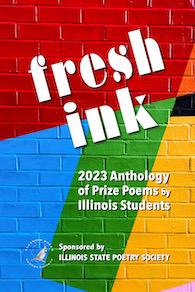
Fresh Ink, 2023 Anthology of Poems by Illinois Students
Fresh Ink 2023 is the inaugural anthology of winning poems in the Illinois State Poetry Society's student contest. From 226 submissions by students in high school and junior high school categories, 31 poems were selected for the anthology. They represent 14 schools, from Chicago in the north to Wolf Lake, 400 miles south. (Book cover by Kathy Cotton) To Sample and Order at Amazon.com
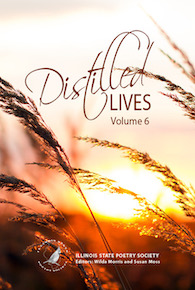
Distilled Lives, Volume 6, ISPS Poetry Anthology
Distilled Lives, Volume 6 offers a rich and diversified chorus of voices captured in verse. The featured poets explore a variety of terrains and tableaux, from the Ganges River in India to quaint cafes in Europe, from boisterous bistros in Chicago to the fertile farmlands of Illinois. Its language is as expansive as space and as intimate as a heartbeat. The compendium of work ranges from sonnets to haiku to free verse—a combination of forms distilling the creative essence of modern poetry.
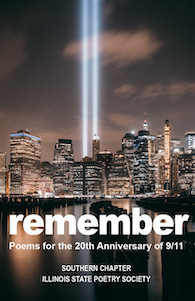
Remember: Poems for the 20th Anniversary of 9/11 offers a two-decade look back at the terrorist attack. Set in 30 poems interspersed with photos and news notes, the collection closes with a chapter of peace poems. In diverse styles and forms, 18 members of the Illinois State Poetry Society Southern Chapter bring to these pages personal reflections on the horrific event, the nation's aftermath of loss and grief, and, still, our longing for peace.
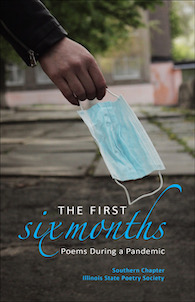
The First Six Months, a pandemic snapshot of March through August 2020, features work by 22 diverse southern Illinois poets as they learned to sequester, social-distance, mask, and deal with both uniquely personal and worldwide challenges. Though the anthology's themes of COVID-19 and racial justice protests reflect this period, the in-the-moment viewpoints are as individual as the poets themselves. Photos, art, and snippets of news reports accompany the poetry, adding to a creative record of the unprecedented months of one spring, one summer.
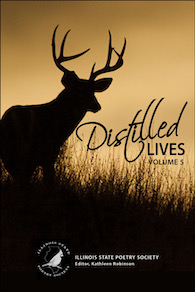
Distilled Lives, Volume 5 presents recent poems from 70+ writers new and established, all members of the Illinois State Poetry Society. The observations, memories, triumphs, laments—yes, and comic moments, too—presented by the assembled pieces reflect the diversity of the members and the breadth of interests they represent. To Sample and Order at Amazon.com
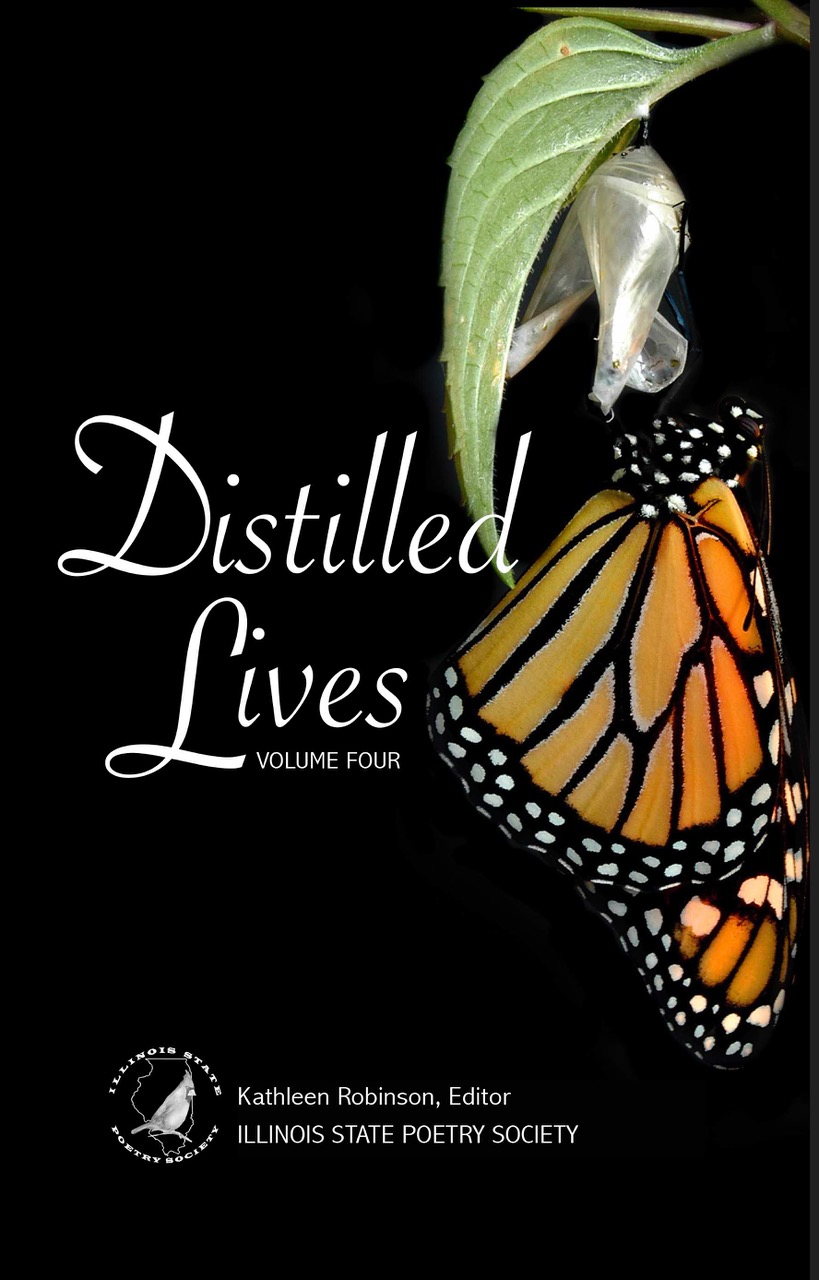
Distilled Lives, Volume 4, ISPS Poetry Anthology
"What I love most about this wonderful 4th edition of Distilled Lives is its clarion call to pay thoughtful attention to the world around us and within us. For indeed, as these remarkable poets make clear in these poems, all of life is worthy of such sustained attention and creative response. In these pages, readers will be treated to unfamiliar experiences made viscerally accessible. So too, readers will be moved by fresh perspectives on familiar themes. Spanning a broad range of subject matter, style, and treatment, there are poems in this collection to appeal to every reader." —Arlyn Miller, Senior Editor of Poetic License Press
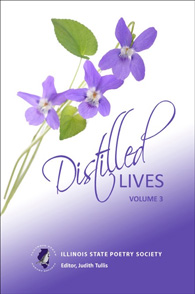
Distilled Lives, Volume 3, showcases the talented voices of sixty-seven Illinois State Poetry Society member poets who deal in a variety of styles about personal catastrophes and triumphs, grounded by the seasons and values of America’s heartland. Quiet pleasures along with quiet griefs are given the same dose of wit and wisdom honed by the work of those with rolled-up sleeves in overalls as well as those with daily commuter passes in briefcases. This is a collection of powerful human stories lived with uniquely Midwestern ethics.
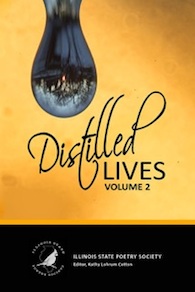
Distilled Lives, Volume 2, is a rich and diverse collection of poetry from members of the Illinois State Poetry Society. Represented in the anthology are new word-crafters alongside poets in their nineties who have been writing throughout their lives. There are first-timers as well as Pulitzer Prize and National Book Award nominee James Reiss and the prolific Joan Colby and Jacob Erin-Cilberto, each with more than a dozen volumes to their credit. You will find formal forms, poems with stylized messages, rhymed lines, and prose-poem paragraphs.The lives distilled here offer a panoply of poetic style and individual creativity, a challenging and comforting gift of words offered by eighty-one representatives of ISPS.
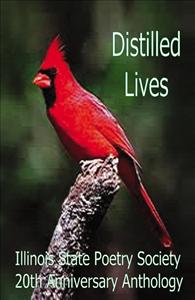
Seventy-five members of Illinois State Poetry Society have, as their 20th anniversary anthology's title promises, distilled life with its vicissitudes and revelations. Poems weave universal themes in rhyme and free verse while presenting fresh, provocative and sometimes
metaphysical insights. Humor, pathos, reverie and existentialism, among other diverse tones, combine in this entertaining and insightful collection.
Contact Us
If you have questions regarding ISPS or this website, please click the link below to send us an email.




 Seventy-five members of Illinois State Poetry Society have, as their 20th anniversary anthology's title promises, distilled life with its vicissitudes and revelations. Poems weave universal themes in rhyme and free verse while presenting fresh, provocative and sometimes
metaphysical insights. Humor, pathos, reverie and existentialism, among other diverse tones, combine in this entertaining and insightful collection.
Seventy-five members of Illinois State Poetry Society have, as their 20th anniversary anthology's title promises, distilled life with its vicissitudes and revelations. Poems weave universal themes in rhyme and free verse while presenting fresh, provocative and sometimes
metaphysical insights. Humor, pathos, reverie and existentialism, among other diverse tones, combine in this entertaining and insightful collection.